2025 Annual Report
Advancing Second Chances. Strengthening Oversight.
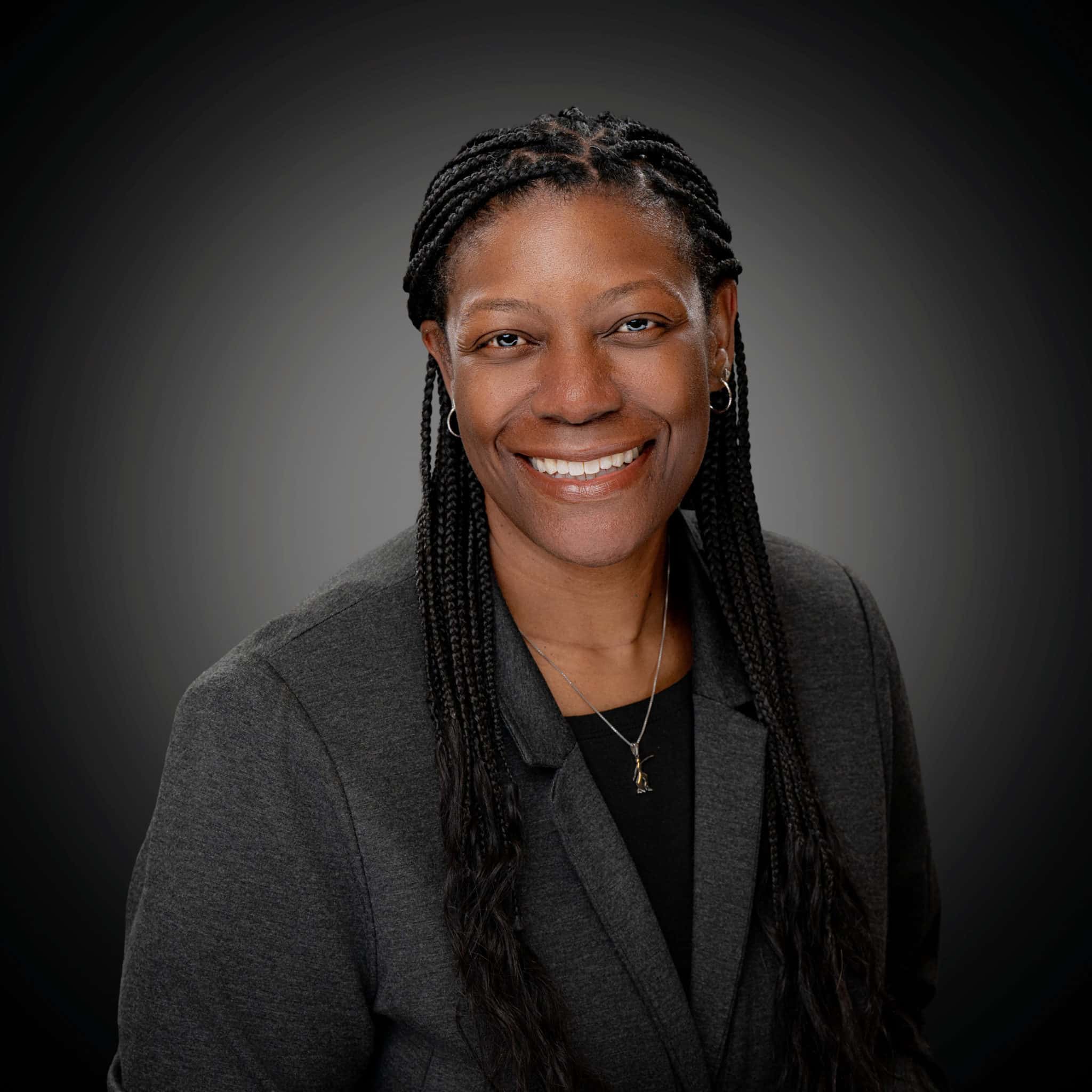
Dr. Shaneva D. McReynolds
President, FAMM
A Letter from Our President
Dear Friends,
In many ways, 2025 was about naming hard truths clearly while deepening our commitment to the people most impacted by them.
Across the country, we saw unmistakable signs of strain and failure in our systems:
- Too many people remain incarcerated who do not need to be, with limited access to meaningful second-look opportunities, clemency, or compassionate release.
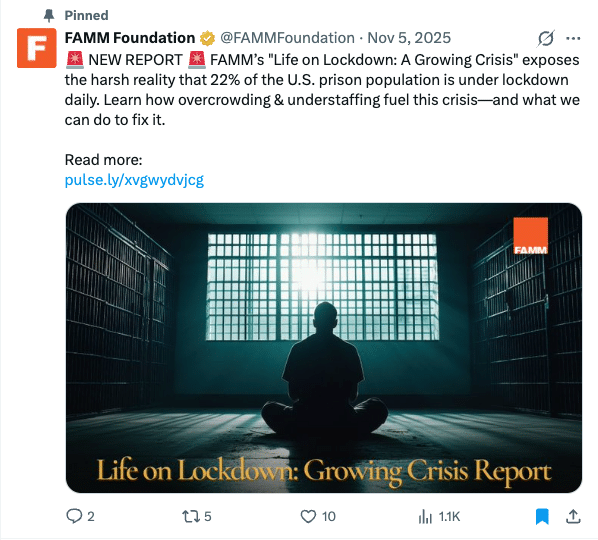
- Prisons are dangerously understaffed, contributing to extended lockdowns, neglect, and abuse – conditions that are devastating not only to those incarcerated, but to the families who, in many respects, serve the sentence alongside them.
- The human toll cannot be overstated, excessive sentencing and harmful prison conditions reshape entire families and communities, often for a lifetime.
At the same time, our work felt more urgently needed than ever. In 2025, we experienced a meaningful increase in engagement from our families – more stories shared, more outreach for help, and more trust placed in FAMM as a steady, credible, and nonpartisan advocacy leader in an uncertain political climate. That growth wasn’t abstract; it was personal, reinforcing why centering families, and the lived experiences of those impacted by both crime and incarceration, remains core to our mission. We carried their voices into every aspect of our federal and state advocacy.
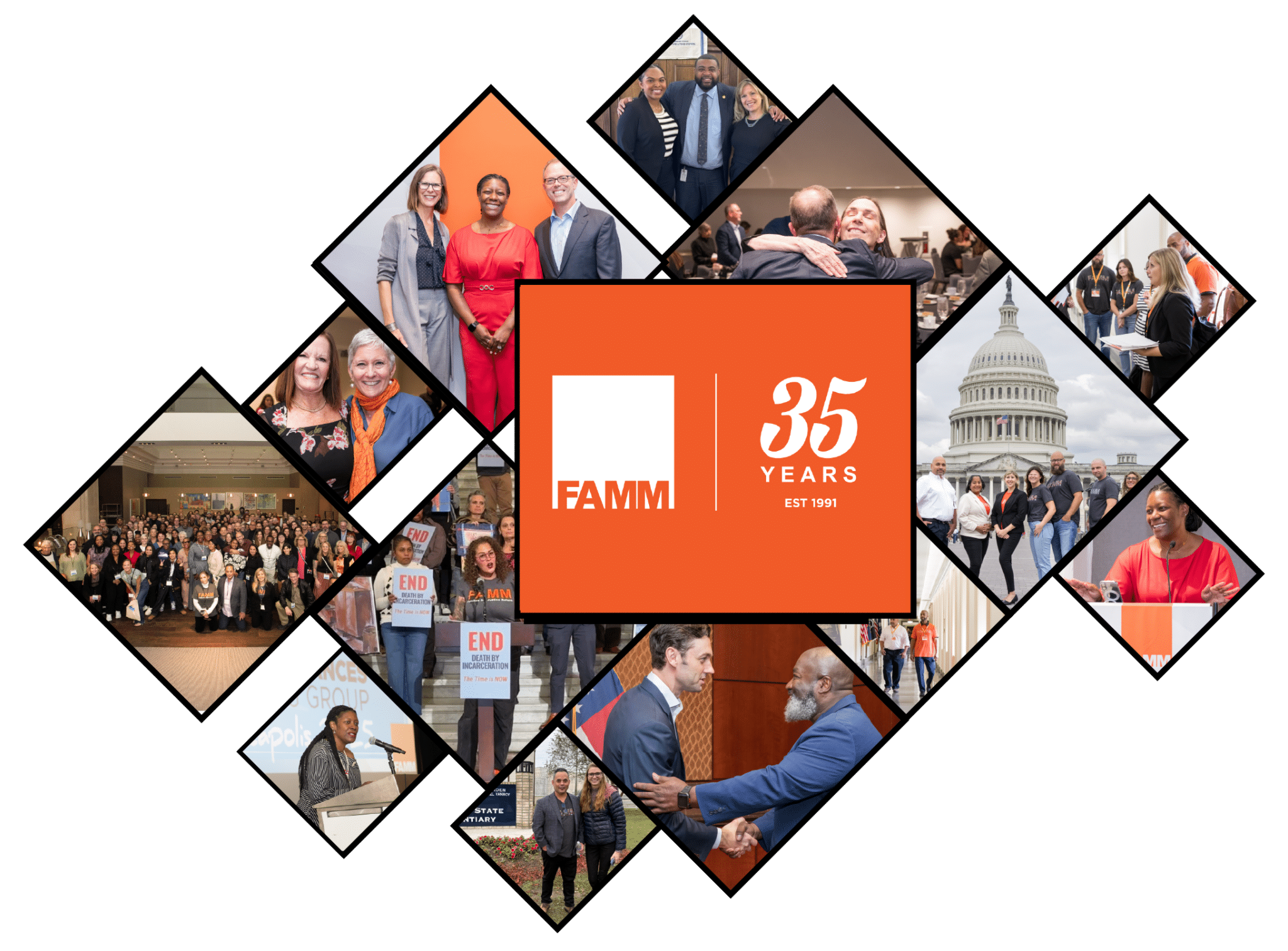
Looking ahead, 2026 represents both momentum and meaning. As we enter our 35th year, FAMM is not simply responding to crises – we are building a lasting legacy of reform, accountability, and humanity. Our focus will be on driving forward:
- Strategic sentencing reform, expanding second-look opportunities and release pathways while safeguarding against mandatory minimums and other policies that undermine proportionality.
- Elevating survivor-informed second-look advocacy, ensuring that sentencing reform and release decisions meaningfully incorporate the voices and lived experiences of those most directly harmed.
- Stronger prison oversight and transparency, ensuring accountability in facilities facing chronic understaffing, prolonged lockdowns, and unsafe conditions. Policies that recognize redemption, dignity, and public safety as compatible – not competing – values.
In a political climate marked by uncertainty and polarization, FAMM’s role as a steady, nonpartisan, family-centered voice is essential. The work is harder, the stakes are higher, and the need is clearer – but so too is our purpose.
Dr. Shaneva D. McReynolds
President, FAMM
STORYTELLING
Stories that Move People
In 2025, families trusted FAMM with their stories in deeper and more urgent ways than ever before. Their experiences shaped the national conversation and fueled our advocacy at every level.
Sentencing Reform
From Boyhood to Manhood
What does it mean to grow up behind bars? One man’s journey from boy to adult in federal prison illuminates why sentencing reform isn’t just policy — it’s personal.
Compassionate Release
Sentenced to Suffer
When someone is too sick to pose a threat, why are they still locked up? This story puts a human face on the broken system blocking compassionate release for the people who need it most.
Oversight
Too Many Lockdowns
Lockdowns that stretch for months. Families cut off. People forgotten. Without meaningful oversight, prisons operate in the dark — and someone has to push back.
Family Impact
Songs on the Open Road
A father sings to his children through phone calls and letters. This is the story of love that survives distance — and the toll incarceration takes on families left behind.
Our Powerful Video Storytelling Connected Policy and People
These two reforms could change one man’s entire life in Virginia. Watch “The Necktie That Waited 40 Years.”
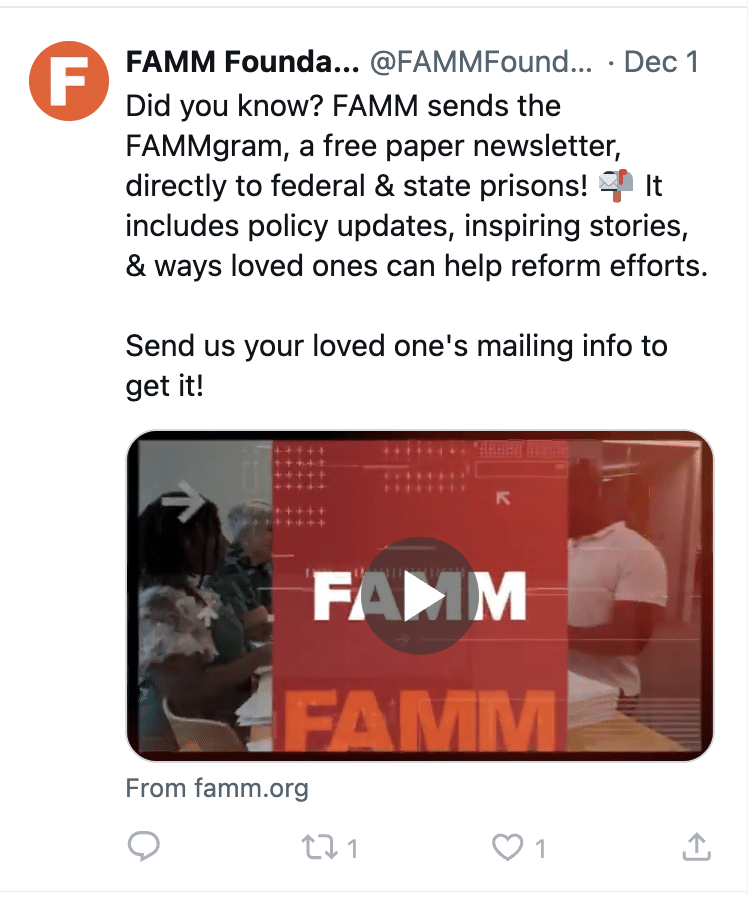
The Return of the FAMMgram! Sometimes the old ways are the best ways — we returned to sending print editions of our newsletter to prisons all over the country in 2025.
Advocacy From the Inside Out
As part of a pilot program, we traveled to three Pennsylvania prisons to share Advocacy and Storytelling training directly with incarcerated people — designed to educate them about policy and effective advocacy storytelling. We plan to expand within the Pennsylvania Department of Corrections, in other states, and into the Federal Bureau of Prisons.
COMPASSIONATE RELEASE
FAMM at the Forefront of Compassionate Release
Maryland Moves the Ball
FAMM and partners passed not one, but two bills to improve medical and geriatric release in 2025. SB 181 and HB 1123 expand opportunities for some incarcerated people who are aging or meet certain chronic or terminal medical criteria to seek release through parole. FAMM is providing significant implementation support through our state Compassionate Release clearinghouse program to ensure the newly passed laws are implemented robustly.


North Carolina Clearinghouse Secures Its First Compassionate Release:
The North Carolina Compassionate Release Clearinghouse achieved a major milestone this year – its first successful release.
The Federal and State Compassionate Release Clearinghouses recruit, train, and support pro bono attorneys and connect them with volunteer medical experts to represent seriously ill and aging people in prison who meet release criteria.
At the state level, these clearinghouses bring together lawyers, doctors, advocates, correctional officials, formerly incarcerated people and their loved ones, and social workers to improve outcomes for people who would otherwise be left behind.
FAMM provides the backbone of this work, offering convening support, technical and organizing assistance, resource development, pro bono training, family resource guides, reentry planning, and client screening. FAMM’s collaborative, relationship-driven approach connects clearinghouses with parole boards and departments of correction, building trust and partnerships that help dismantle barriers to release.
That strategy paid off in North Carolina. After previously being denied compassionate release, an elderly man was finally able to return home in the first week of September 2025. By elevating his case with agency leadership and supporting a dedicated pro bono legal team, the North Carolina Compassionate Release Clearinghouse helped secure his freedom – marking the first state-level compassionate release victory in FAMM’s clearinghouse network.
Our work in North Carolina, including the challenges that remain, was featured by North Carolina Health News, https://www.northcarolinahealthnews.org/2025/08/14/few-released-from-prison-under-medical-release/.
Hawaiʻi Clearinghouse Helps Shape Historic Compassionate Release Legislation
In Hawaiʻi, the clearinghouse took on a different, but equally transformative, role: helping draft the state’s first-ever compassionate release legislation.
FAMM participated in a legislative briefing on compassionate release that brought together lawmakers, advocates, and family members of incarcerated people seeking release. The briefing highlighted the urgent need for reform and helped build momentum for a compassionate release framework where none had previously existed. You can view the briefing here.


Clearinghouses Expand to Three More States
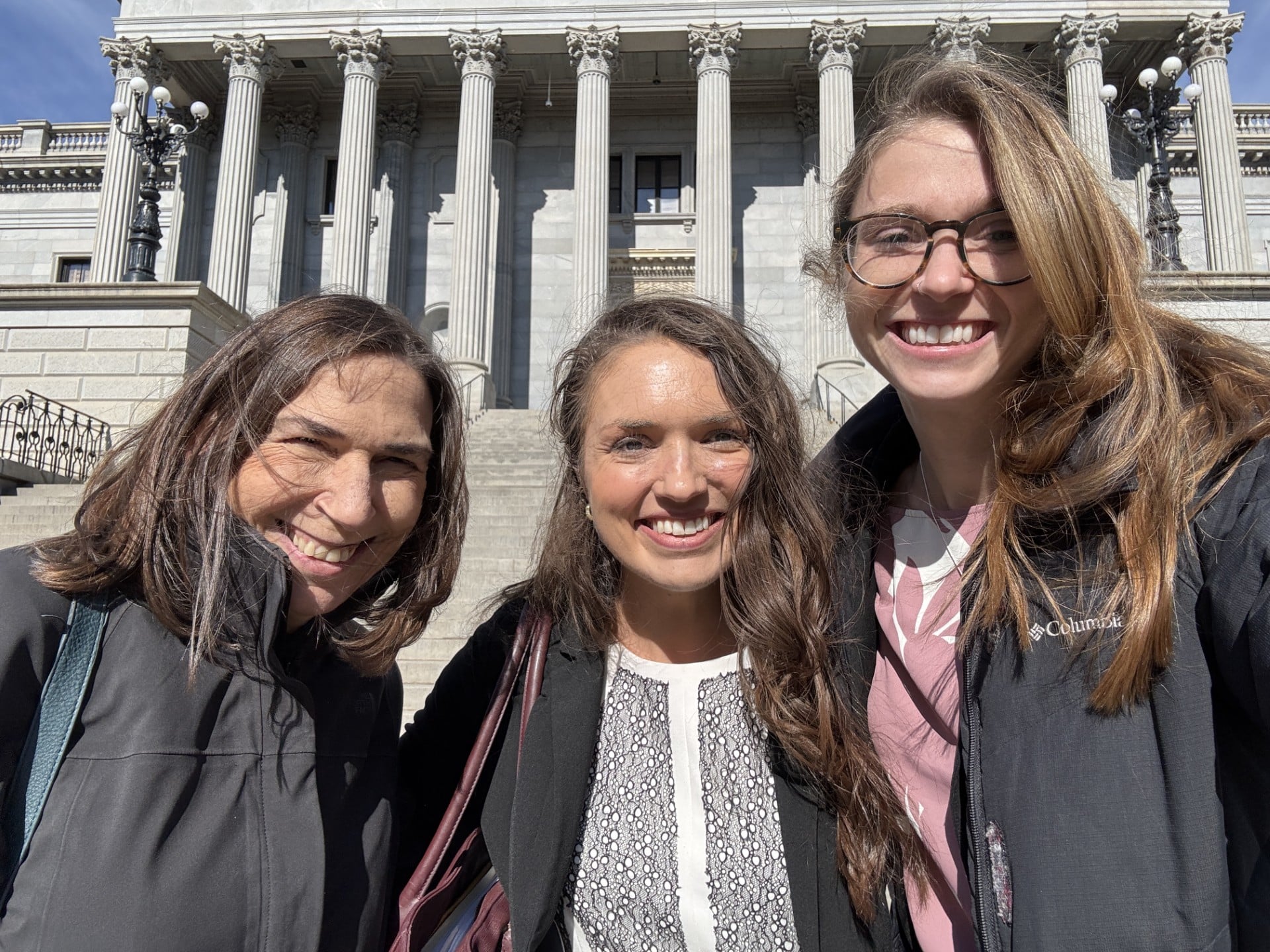
In addition to Hawaiʻi and North Carolina, this year marked significant growth for the state Compassionate Release Clearinghouse program with launches in Louisiana, Maryland, and South Carolina. Each is modeled after the success of FAMM’s Federal Compassionate Release Clearinghouse and grounded in FAMM’s theory of change: individual cases can open the door to systemic reform.
Federal Compassionate Release Clearinghouse Expands Its Reach
The Federal Compassionate Release Clearinghouse grew stronger this year, thanks to expanded pro bono partnerships that significantly increased our capacity to serve people with extraordinary and compelling reasons for a sentence reduction. As a result, approximately seven individuals had their federal sentences reduced this year. FAMM is also laying the groundwork for the next frontier in compassionate release, launching an initiative focused on people who are physically abused while in custody.
Compassionate Release at the U.S. Supreme Court
FAMM filed two amicus briefs in United States v. Fernandez and United States v. Carter/Rutherford, cases before the Supreme Court addressing the scope of compassionate release, particularly the “unusually long sentences” provision. Leading up to the Court’s November 12 arguments, FAMM engaged in proactive media outreach, produced accessible video explainers, and mobilized our network to raise awareness.
SENTENCING REFORM
Sentencing Reform Offense and Defense, Year-Round
Eliminating the Crack/Powder Sentencing Disparity
FAMM successfully advocated the repeal of unjust sentencing disparities between crack and powder cocaine in three states: Arizona, Maine, and Virginia. The bills passed unanimously in Arizona and Virginia. Because of FAMM’s focused advocacy, crack/powder disparities now only remain in three states (Iowa, New Hampshire, and North Dakota) and the federal system.
New Sentencing Commission in Michigan
Gov. Whitmer of Michigan signed legislation creating a sentencing commission. Michigan has sentencing guidelines but had no commission to collect data, study them, or recommend updates. The new Commission is likely to take up habitual sentencing, stacking, disparities, and more.
NO in North Dakota
FAMM joined a coalition of national organizations to stop legislation in North Dakota that would have greatly expanded truth-in-sentencing and reduced the use of effective transitional housing. Despite a strong campaign from the state’s Attorney General, the North Dakota House of Representatives voted down the legislation.
Monitoring Missouri
FAMM continues to ward off the passage of legislation to expand truth-in-sentencing in Missouri, tracking and opposing various legislative vehicles that would have expanded the number of people required to serve 85 or 100 percent of their sentence. FAMM and partners were successful in preventing these policies from passing during the 2025 session.
Shaping Federal Sentencing Policy
The U.S. Sentencing Commission remains a critical venue for advancing fair and proportional sentencing, and FAMM continues to be a leading voice at the table. During the 2024–2025 amendment cycle, FAMM submitted detailed public comments urging changes to the federal drug guidelines, elimination of the Career Offender guideline, and simplification of the sentencing guidelines overall. The Commission adopted several significant reforms this cycle, including important amendments to the drug guidelines.
FAMM President Dr. Shaneva D. McReynolds was invited to testify before the Commission, sharing her powerful perspective as both a crime survivor and a sentencing reform advocate. Federal Defenders described her testimony as a compelling reminder that survivors of crime are not a monolith, and that justice must reflect a diversity of lived experiences.
SECOND LOOK
Clemency Now! Leading With Justice and Mercy
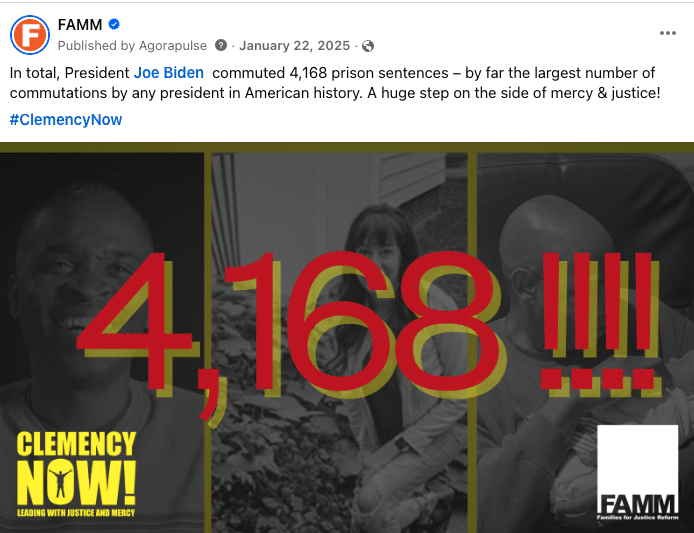
FAMM’s “Clemency Now!” campaign (October 2024–January 2025) mobilized powerful storytelling and direct advocacy to elevate clemency as a vital tool for justice, reaching senior staff at the White House and helping build public momentum around clemency reform.
Progress in Maryland
In 2025, FAMM and a coalition of national and state partners passed second look legislation in Maryland. The Maryland Second Look Act (HB 853) allows many people who were convicted as youth or emerging adults (18–25) and have served at least 20 years in prison to petition the court for a reduction in sentence.
Broad Second Look Passes Nevada Assembly
In 2025, FAMM and a coalition of state partners advanced one of the most expansive second look bills in the country out of a legislative chamber; the Nevada Assembly. The Nevada Second Look bill (AB 91) would have granted people serving sentences (including life without parole but excluding capital punishment) the ability to petition the court for resentencing after serving 10 years. The Nevada legislature will reconvene in 2027.
MEDIA & ENGAGEMENT
When the Stakes Rise, Clarity Matters More Than Ever
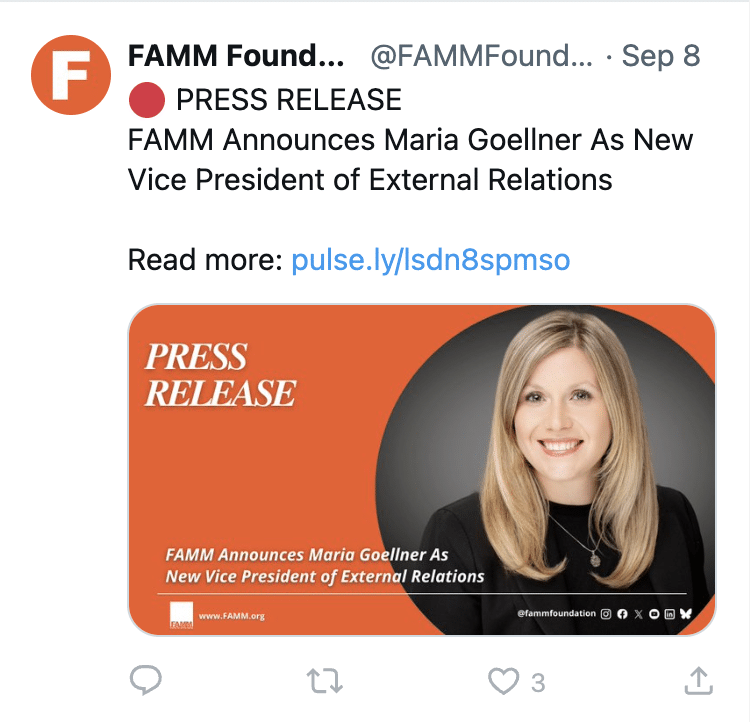
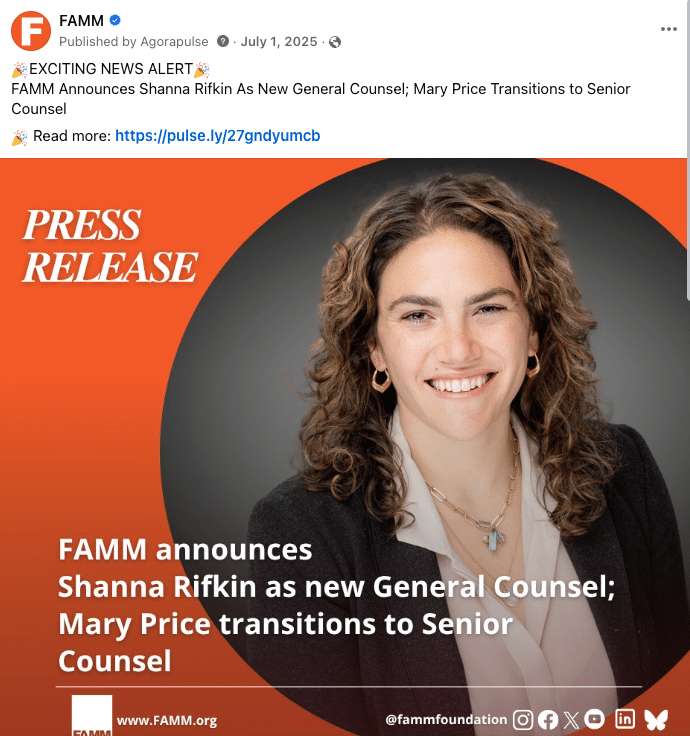
In 2025, FAMM increased media engagement and digital outreach to elevate sentencing reform, clemency, compassionate release, and prison oversight. Leadership milestones strengthened our credibility: President Dr. Shaneva D. McReynolds was appointed to the U.S. Sentencing Commission Sentence Impact Advisory Group, Shanna Rifkin was promoted to General Counsel, and Maria Goellner was promoted to Vice President of External Relations.