
Second Chances
Too many people are in prison for too long — with virtually no way to get a second chance. It’s time our sentencing laws recognize people’s capacity to change and their readiness to come home. We need as many methods as possible to give people an opportunity to be considered for a second chance, reunite families, and heal communities.
FAMM advocates for second chances through:
SECOND LOOK LAWS
People change. Their sentences should, too.
Second look laws allow decision-makers such as courts or parole boards to reevaluate a person’s sentence after a sufficient period of time served in prison and determine if that sentence is still necessary. We support second look laws because people change over time, and imprisoning people long past the point of necessity makes no one safer.
You can view existing second look laws here.
Support Second Look Laws in your state. Urge your lawmakers to give people who have served long sentences a chance to come home.
FEATURED
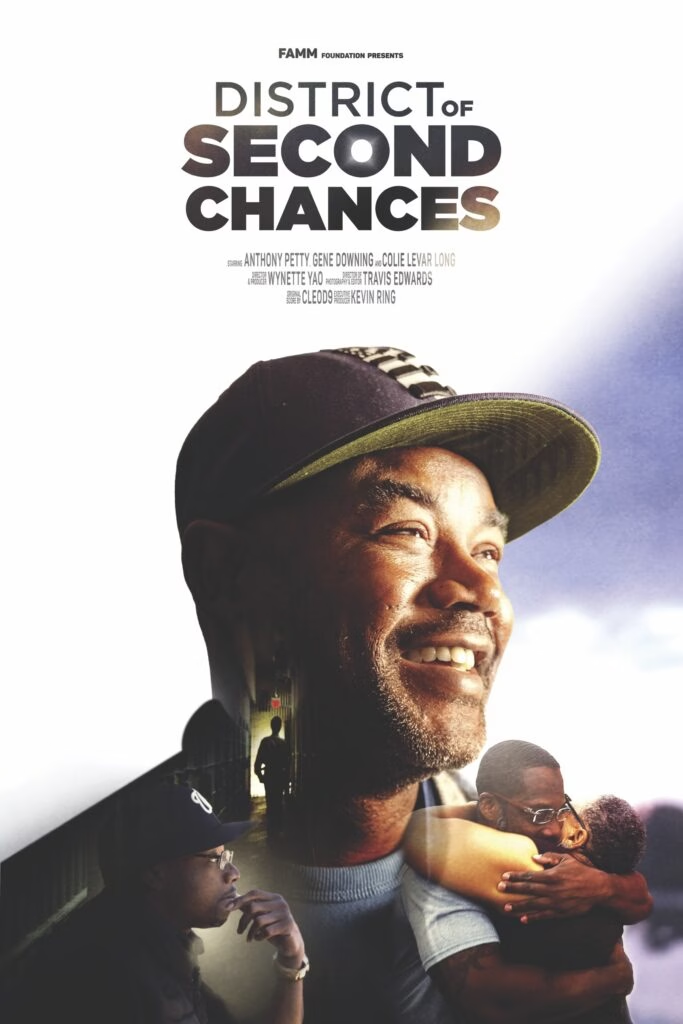
District of Second Chances
A quest for redemption is unfolding in Washington, D.C. Thanks to forward-looking “second chance” legislation, three men who were sentenced in their youth to life in prison have the chance to plead for release.
The film captures their journeys as they unfold: Anthony “Pete” Petty, who has just won his freedom and must rebuild his life after three decades in prison; Gene Downing, who awaits his second chance hearing after two decades behind bars and hopes to reunite with a daughter born after his incarceration; and Colie Levar Long, who is mentoring youth incarcerated with him at D.C. Jail. He longs to finish college as a free man after a 26-year interruption.
COMPASSIONATE RELEASE
Our prison population is aging rapidly.
Incarcerated elders are the most expensive to keepCompassionate release allows people in prison to qualify for early release under certain criteria, most frequently because of illness or age. We believe people in prison should be released when they are too debilitated to commit further crimes, too compromised to benefit from rehabilitation, too impaired to be aware of punishment, or when there are extraordinary and compelling circumstances.

Take Action on Compassionate Release
Tell your state legislators: support compassionate release in your state!
Compassionate Release Campaigns and Work
Recently, FAMM ran a comprehensive study on each state’s use compassionate release. The majority of states flunk. But, we are here to help change that with a toolkit that stakeholders and lawmakers can use to fix failing programs. We hope the report cards spur discussion, concern, and in failed states – outrage and action.
- Find our state report cards here.
- Read our report on how we arrived at our grading system.
- Use our toolkit to help fix failed and underperforming programs.
- Find your state’s compassionate release policy here.
- Read our summary of state compassionate release programs here.
- Read FAMM’s poll showing that 70% of Americans, across political lines, support compassionate release programs here.
When a sentence is imposed in a federal criminal case it is final. Unlike many states, the federal system does not have parole. One of the only ways to reduce a federal sentence is by filing a Reduction in Sentence motion, often called a compassionate release motion. An individual is eligible for a reduction in sentence if they present “extraordinary and compelling reasons.” The sentencing judge will first determine if they do and if so, then consider whether the sentencing factors in 18 U.S.C. § 3553(a) support a reduced sentence. Judges have discretion in ruling on reduction in sentence motions – they can decide whether to grant the motion, on what grounds, and how much time to shave off a sentence.
Extraordinary and compelling circumstances are defined by the United States Sentencing Commission and can be found in Policy Statement §1B1.13.
FAMM works on compassionate release at the federal level by advocating for improved compassionate release policies at the Sentencing Commission, Congress, and the Federal Bureau of Prisons. FAMM also manages the Federal Compassionate Release Clearinghouse to ensure that trained counsel represent eligible federal prisoners asking the court for a reduced sentence.
Resources:
Since 2019, FAMM has run a clearinghouse alongside NACDL for individuals who believe they have viable claims for a reduced sentence under Policy Statement 1B1.13. Our work on the clearinghouse has led to the early release of nearly 300 people from federal prison
We work to identify cases, screen cases, and, when possible, find pro bono attorneys to represent the person in federal court and/or with the Bureau of Prisons. We provide training and support for the pro bono attorneys and provide information and support for incarcerated people and their loved ones on the trajectory of a compassionate release case.
If you or your loved one believe they have an “extraordinary and compelling” reason for a reduced sentence, please reach out to research@famm.org, or have your loved one add research@famm.org to their CorrLinks account. We will provide an intake form to complete. Your answers will give us information we need to assess the case.
If you are a lawyer and are interested in volunteering for our clearinghouse efforts, please send an email to Shanna Rifkin, at srifkin@famm.org. Please note that no litigation/criminal defense experience is required.
Starting in 2024, FAMM launched state compassionate release clearinghouses in five states: North Carolina, South Carolina, Louisiana, Hawai’i, and Maryland. We work to identify cases, screen cases, and, when possible, find pro bono attorneys to represent the person in front of the Department of Corrections and Parole Board. We provide training and support for the pro bono attorneys and provide information and support for incarcerated people and their loved ones on the trajectory of a compassionate release case.
Please visit our memos page to learn more about the compassionate release process and criteria in your state. If you or your loved one may be eligible for compassionate release, please complete this form or reach out to statemedicalrelease@famm.org.
If you are a lawyer and are interested in volunteering for our state clearinghouse efforts, please complete this form or send an email to Molly Crane at mcrane@famm.org. Please note that no litigation/criminal defense experience is required.
- https://www.chicagoreporter.com/26-died-waiting-families-call-for-reform-of-illinois-medical-release-program/
- https://www.hawaiipublicradio.org/local-news/2025-10-07/compassionate-release-laws-for-inmates-with-medical-conditions
- https://www.northcarolinahealthnews.org/2025/08/14/few-released-from-prison-under-medical-release/
REPORTS & RESOURCES
Learn More About Compassionate Release
Everywhere and Nowhere: Compassionate Release in the States
“Everywhere and Nowhere: Compassionate Release in the States,” is a comprehensive, state-by-state report on the early-release programs available to prisoners struggling with certain extraordinary circumstances, such as a terminal or age-related illness. The report takes a deep dive into the regulations and requirements of these programs in each state, including the varying categories of release, eligibility criteria, and reporting. The analysis also reveals a troubling number of barriers faced by prisoners and their families when applying for early release.
Grading the States: The State Compassionate Release Report Card Project
With “Grading the States: the State Compassionate Release Report Card Project,” FAMM issues a report card for every state compassionate release program in the nation. FAMM graded the programs on elements we consider essential to ensuring that the programs benefit those who need them: medically vulnerable, aging, and terminally ill incarcerated people whose continued imprisonment no longer serves the interests of justice. In addition to the full report, you can see how all of the states were graded on this full map.
Stories of Compassionate Release
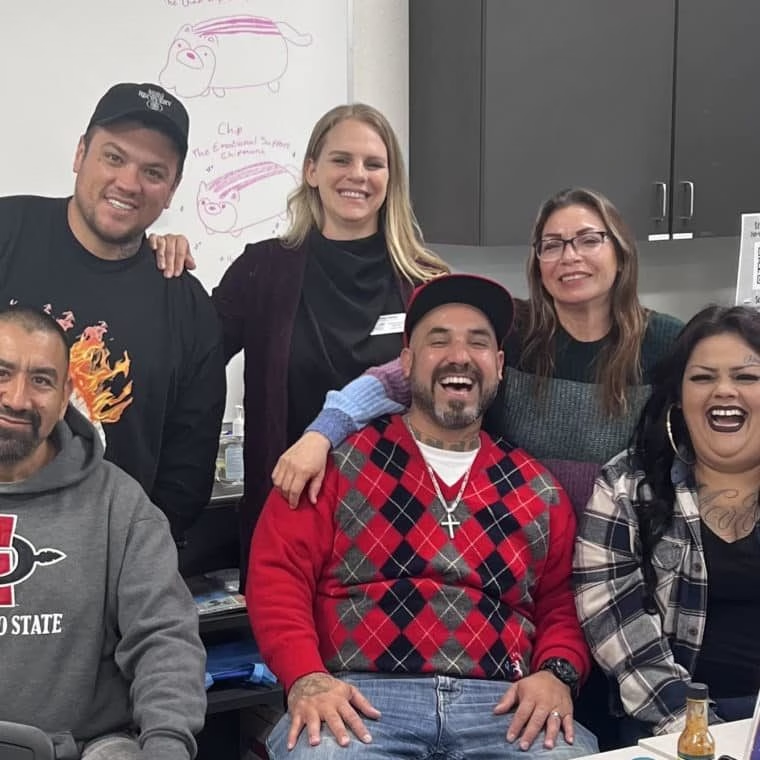
Vanessa Rojas
“I thought I was going to die with a needle in my arm. And that didn’t happen. If I came from where I came from and changed, anybody can. It doesn’t matter how bad the situation seems. People can change. Everybody has potential.”
The Case for Compassionate Release as a Second Look
The stories here of Jamal, Adam, Lisa, and Devon show why compassionate release reform in the First Step Act makes sense and should be used more often.
CLEMENCY
Clemency reflects the shared values of mercy and redemption.
Granted by a state governor or the president, commutation — which is a form of clemency — can reduce or terminate a person’s sentence before their scheduled release date. Formerly incarcerated people are contributing to society in positive ways because they were given a second chance. State governors and the president should grant clemency to more people who have demonstrated readiness to come home.
Want to know your state’s laws on clemency?
Stories of Clemency
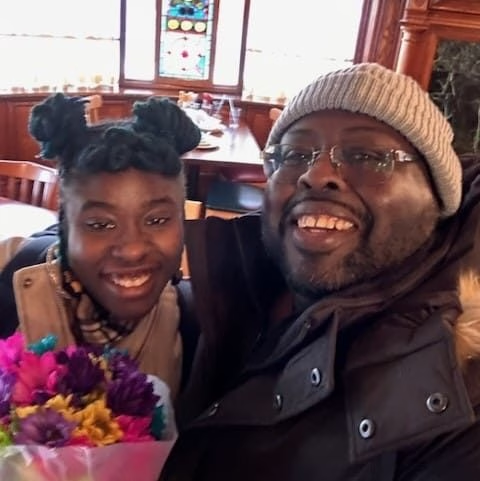
Anthony Jones
Anthony was granted clemency after being in prison 29 years. He now fights to make our criminal justice system more just and appears in court on behalf of people still locked up, telling his story to lawmakers and the media.
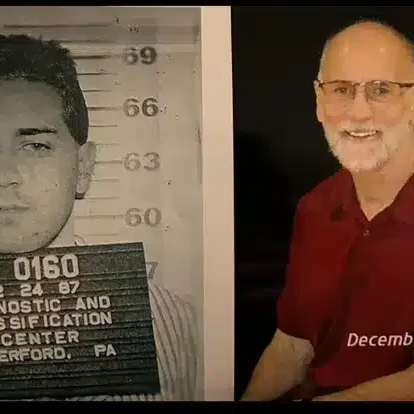
Richie’s Story of Redemption & Hope
“Between the ages of 20 and 22 years old, I made terrible — life altering — choices where I eventually caused the death of another person and affected many lives, including my own. As a result, I lost my freedom and have spent almost my entire adult life incarcerated.”
Pressured Into a Terrible Decision
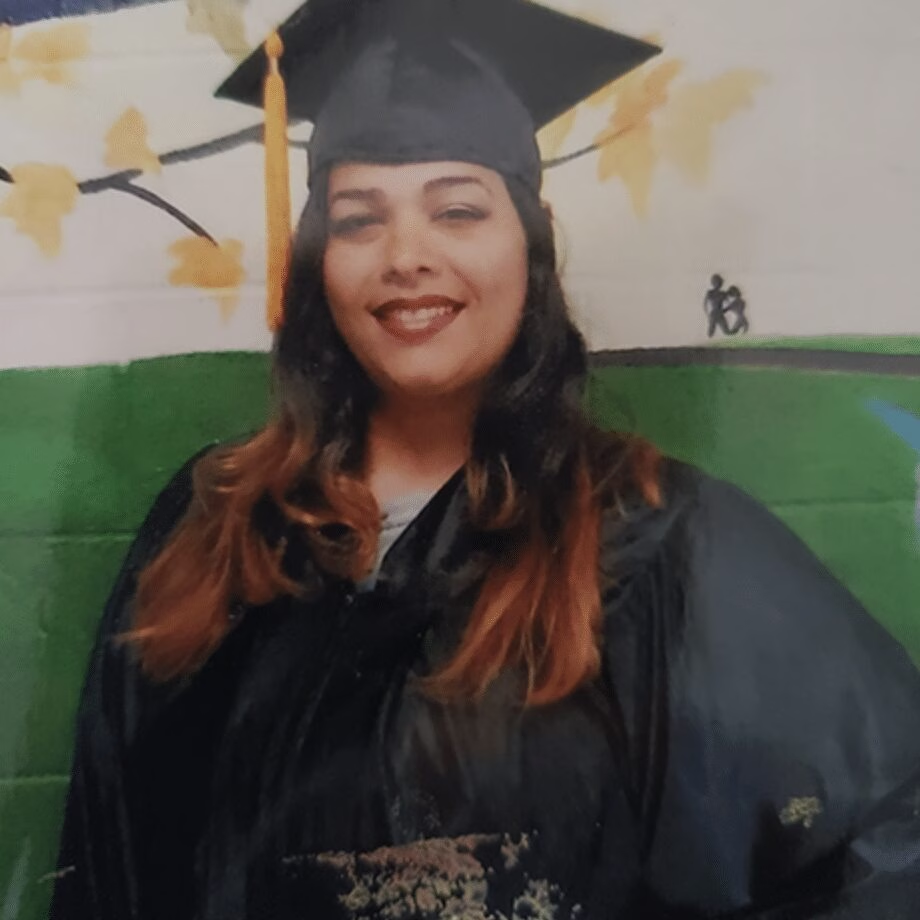
Jomari DeLeon made two drug sales over 24 hours, making less than $200. Kingpin? Hardly. Yet this first-time offender was sentenced to 15 years. Even the judge didn’t want to give her that much time. And making matters worse, the same crime today carries three years. A second chance for Jomari is humane, just, and common sense.
Evans Ray, Jr.
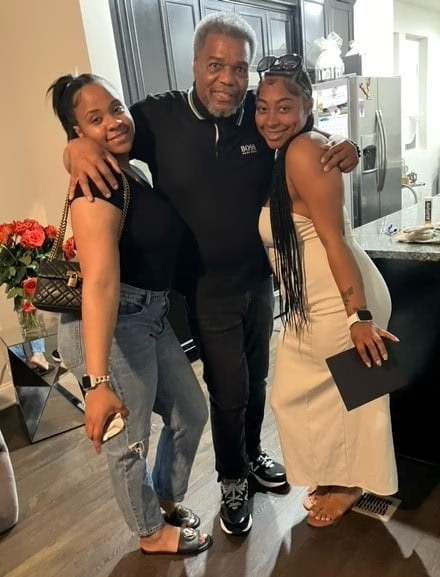
“I am granting your application [for clemency] because you have demonstrated the potential to turn your life around,” President Barack Obama wrote. “Now it is up to you to make the most of this opportunity.”
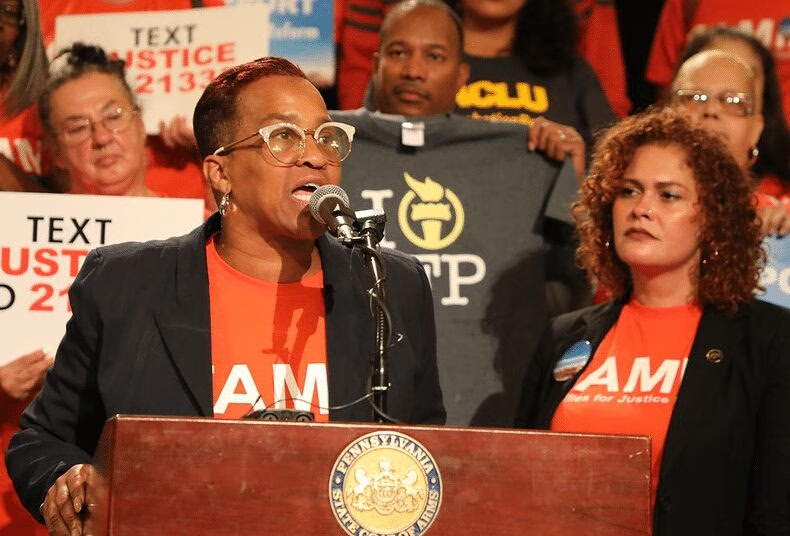
Change can’t happen without you.
From signing petitions to emailing lawmakers, there are many ways to make a difference for the people and families who need it most.