
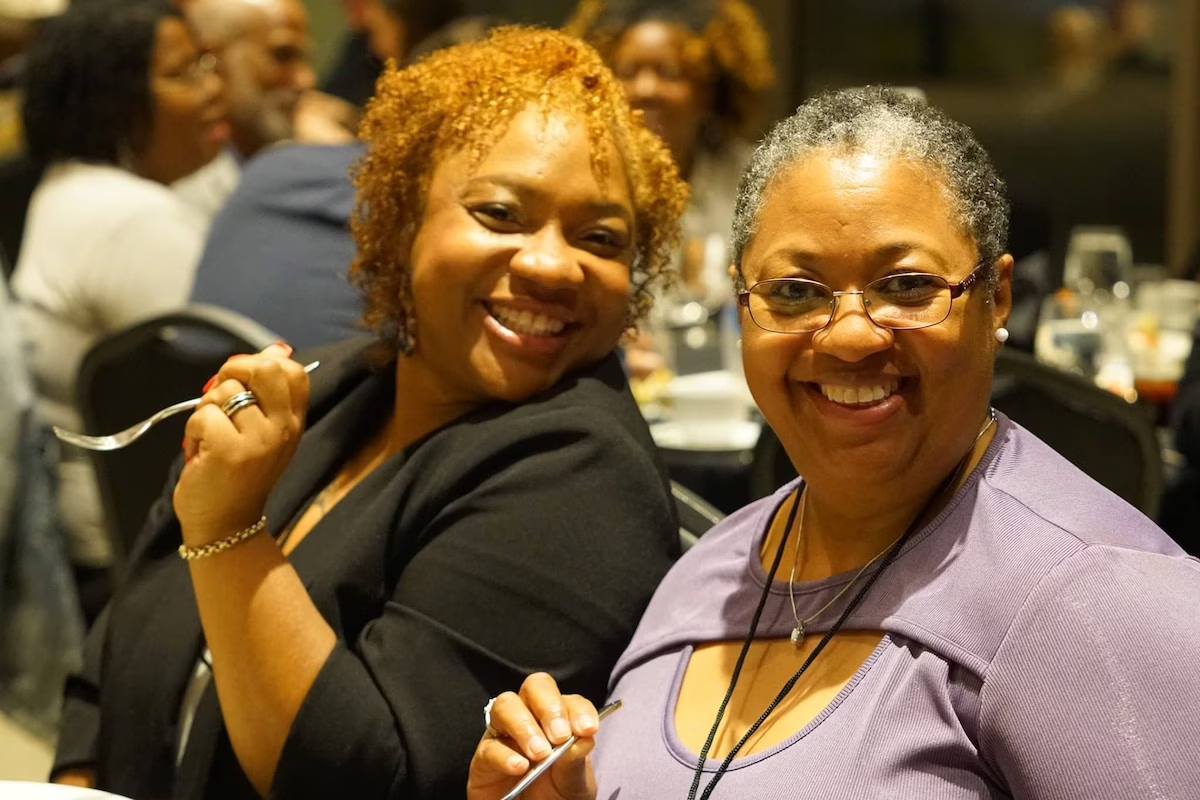
For FAMMilies
FAMM was founded more than 30 years ago by families directly affected by the criminal justice system. When a person is incarcerated, their family suffers, too. Affected families continue to deeply inform our mission to change hearts and minds to make reform a reality.
FAMM advocates for second chances through:
“As a family member, it is so rewarding to have people who can identify with you. Not just sympathize with you, but identify with you. And that’s what happens with FAMM.”
Buel Moore
Father to Sara, who was released after serving a mandatory minimum sentence under a harsh drug-free school zone sentencing law

REPORTS & RESOURCES
Connect With Us
Social Media
Our FAMMily is all over social media – we’d love you to join us there! On Facebook, we host three different groups. On our main page, you’ll find information, updates around our issues, and so much you need to know about how to fight for reform for you and your loved one. Our two other Facebook pages are only open to family members and returning citizens. It’s in these groups that you’ll find deep support and care – from people who are going through exactly what you are.
Join us on FAMM’s Main Group or in FAMMilies in Action.
Monthly Family Zoom Calls
Every month, FAMM holds FAMMily calls on Zoom. They range from Storytelling Workshops, to Advocacy Trainings, to Policy Updates (state and federal). These calls are open to all, and they are great way to learn about what FAMM is focused on, get to know our staff and each other, hone your super-important advocacy skills, and find and give support to each other. Please join us – you’ll find the links to register in our emails and on our Facebook page. We look forward to seeing you on Zoom!
Sign Up for Text Messages
When you need to know, you NEED to know! That’s why sometimes FAMM sends you SMS messages about important events or ways you can advocate. If you’d like to sign up to receive texts from us, text FAMM to 40419. And don’t worry, we won’t send texts very often — just when it’s important.
FAQ
FAMM, formerly known as Families Against Mandatory Minimums, is a non-partisan, non-profit organization based in Washington, D.C., with a national reach. Our mission is to create a more fair and effective justice system that respects our American values of individual accountability and dignity while keeping communities safe.
FAMM works primarily in two areas — changing the laws around sentencing reform and prison oversight. We oppose mandatory minimums and always advocate individualized consideration of every case. We advocate more second chances in the sentencing system, and try to create them wherever possible through things like clemency, compassionate release, and post-conviction second look laws. We also work to create independent prison oversight bodies so that incarcerated people, their families, and correctional staff have somewhere to go outside of the prison for complaints and investigations.
FAMM’s greatest asset has always been the stories of its members. By publicly sharing the impact of unjust sentencing and prison policies on incarcerated people, families, and communities, FAMM makes the problems feel real to decision-makers. We also work directly with legislatures across the country to introduce, advocate, and pass laws about our issues. FAMM works across the political spectrum to ensure the best possible legislative outcomes. This two-pronged approach — public education and targeted advocacy — is core to FAMM’s success to date and will remain critical to its work as the organization expands its efforts nationally.
FAMM has advocated sentencing change at the federal level for more than thirty years. We are actively opposing new and existing mandatory minimums, working to end the crack-powder sentencing disparity and expand clemency and compassionate release, and create independent oversight of federal prisons. FAMM also does significant work at the U.S. Sentencing Commission and files amicus briefs with the U.S. Supreme Court.
FAMM currently has twenty-plus target states, which are chosen based on our legislative priorities, engagement, and membership. Please visit our states page and email famm@famm.org with questions or to discuss our state work further. FAMM has many resources available for people in all fifty states.
Thank you — there are so many ways to work with us! The best things you can do are:
- Sign up for FAMM emails. Make sure to include your full address and phone number so you will get state-specific information and text alerts.
- Attend a FAMM Storytelling Workshop, Advocacy 101 training, or Policy Update call to meet us and meet the rest of the FAMMily! These are held every month and you will receive invitations once you sign up for our emails.
- Tell your lawmakers that you support FAMM’s issues and work your way up to meeting with them in person.
- Share your story with us so we understand what you’re facing.
- Join our private Facebook groups for impacted families.
FAMM’s work by-and-large focuses on policies that affect someone from the day of their sentencing to the day they walk out of prison. There are issues at every stage of the criminal justice system but our expertise lies in this area. We want our work to be the highest quality, and we have a small staff. We do everything we can, as well as we can. We are deeply committed to sentencing reform and independent prison oversight and stay in our areas of expertise.
The criminal justice system in the United States is actually made up of many different systems, called “jurisdictions.” A person can be charged, sentenced, and incarcerated by the local or county government, the state government, the federal government, or a tribal government. Some quick ways to tell which one applies to your loved one’s case are to call your loved one’s attorney and ask; call the clerk of courts at the courthouse where court appearances are and ask; look at the docket or charging document, which should say “County of X versus John Doe,” “State of X versus John Doe,” or “United States of America versus John Doe.” Jails are typically run by local county governments, prisons by state government department of corrections, and federal prisons by the United States Bureau of Prisons.
Sentencing guidelines are used in many places and are determined by looking at a chart that calculates the seriousness of the crime and the person’s criminal history. The calculation is the guideline; judges use them as advice to help them determine how to sentence someone. They are usually advisory.
Mandatory minimum prison sentences are mandatory sentences for certain types of crimes. They are set by the legislature and require automatic, minimum prison terms for certain offenses. Judges have no discretion and have to apply them, regardless of the individual facts of a case. FAMM opposes all mandatory minimum prison sentences. We believe that decision-makers should have discretion to consider the unique facts of every case, 100% of the time.
Can FAMM help me with my case?
FAMM does not represent people in individual cases and cannot review your case or write a letter of support. We can offer you resources and tools to help you become an effective advocate. We also need your help to change the laws! Please sign up for our email alerts here.
I need a lawyer.
FAMM does not give legal advice. Nothing on this website is intended to be legal advice or should be relied on as legal advice. We do not provide legal representation and cannot provide you with an attorney or referrals. We recommend researching attorneys, and contacting your local, state, or federal public defender’s office. You can also contact your local or state bar association for attorney referrals. Find some tips to avoid scams here.
My loved one is incarcerated and I don’t know what to do.
Focus on being there for yourself, your loved one, and helping them get quality legal representation. Please read the “I need a lawyer” section above.
My loved one is facing extreme sentences or a life sentence.
FAMM works for second chances for everyone, with extreme and life sentences. The best things for you to do are listed under the “How can I join FAMM…” section above. You will really feel the community of our FAMMily if you come to one of our calls!
How do I get my loved one home?
Start by learning about the system and talking to other people who have been through it. FAMM is a great place to find community. Start by listening to your loved one and helping them get quality legal representation. Sign up for our email alerts and attend one of our Zoom calls. Be an advocate and don’t give up hope. You are not alone.
My loved one is not getting what they need in prison.
Unfortunately, this is common throughout the United States. Though FAMM can’t work on your loved one’s issues specifically, we do advocate for independent prison oversight. We believe that every prison system should be safe and humane, and that incarcerated people should remain close to their homes to maintain important family bonds. FAMM supports meaningful rehabilitative programs, work, and education opportunities, as well as substance abuse and mental health treatment. Further, we believe that every prison system should be subject to oversight by an independent body that has the authority to monitor and inspect facilities, address prisoner grievances, and provide recommendations for improving correctional departments.
My loved one is incarcerated far away and I need them closer to home.
Typically an incarcerated person can put in for a transfer within their institution. Advise your loved one to look into that process by looking in the inmate handbook, asking their counselor, or researching the prison’s policies in the law library. Although this process is usually internal and will have certain criteria (for instance, being misconduct-free for a specific time frame), sometimes you can help by calling the institution or getting documentation of an issue that needs to be addressed (like an immediate family member being ill and unable to travel far to visit the prison).
FAMM works for second chances at as many points in the system as possible for the most people. Our model legislation provides second chance opportunities for everyone — because we believe judges and decision-makers should be able to weigh the circumstances in every case good, bad, and neutral.
Criminal cases have many stages, usually beginning with arrest and ending with a trial or plea and sentencing. “Post-conviction” means the period of time after someone is sentenced. More on the path of a state criminal case can be found here, and more on the path of a federal criminal case can be found here.
FAMM works on changing the laws that cover the day someone is sentenced until they get out of prison. We don’t work on individual cases; rather, we try to change the laws themselves that affect everyone who is sentenced or in prison. For example:
FAMM works to create as many second chance opportunities as possible at as many points in the criminal justice system as possible. For example, we support expanding clemency and commutation, which are the reduction of a sentence early by the president or a governor. We support compassionate release, which allows older people and sick people to get out early. And, we support independent prison oversight bodies so that incarcerated people, their families, and correctional staff have somewhere to raise concerns about prison policies and have them investigated.
Federal BOP Support Coordinators
For questions and concerns about loved ones in federal prison, it can be helpful for families to reach out to the BOP’s Regional Support Coordinators. Coordinators are tasked with fostering a higher level of communication and transparency by addressing concerns raised by family members and advocates regarding adults in custody. These Coordinators serve as liaisons among the BOP Central and Regional Offices, institution employees, adults in custody, family members, and others. They are expected to respond both to individual issues as well as concerns regarding prison systems.
All Regional Support Coordinators listed below can be reached at this email address: BOP-RSD-SupportAndAdvocacy-S@BOP.gov
Email is the preferred contact method for voicing your concerns and comments.
Below you’ll find contact details for each Support Coordinator, along with a list of the prison facilities they serve in their respective regions.
Brooke Burke — 606-433-2400 ext. 1239
Facilities: Alderson FPC, Ashland FCI, Baltimore RRM, Beckley FCI, Big Sandy USP, Butner FCC, Cumberland FCI, Gilmer FCI, Hazelton FCC, Lee USP, Lexington FMC, Manchester FCI, McCreary USP, McDowell FCI, Memphis FCI, Mid-Atlantic RO, Morgantown FPC, Nashville RRM, Petersburg FCC, Raleigh RR…
Dr. Traci Amundson and Jennifer Jackson — 417-862-7041 x 1856
Facilities: Atwater USP, Dublin FCI, Herlong FCI, Honolulu FDC, Lompoc FCC, Long Beach RRM, Los Angeles MDC, Mendota FCI, Phoenix FCI, Phoenix RRM, Sacramento RRM, Safford FCI, San Diego MCC, SeaTac FDC, Seattle RRM, Sheridan FCI, Terminal Island FCI, Tucson FCC, Victorville FCC, Western RO
Tom Brantley — 850-878-2173 ext. 1419
Facilities: Aliceville FCI, Atlanta FCI, Atlanta RRM, Bennettsville FCI, Coleman FCC, Edgefield FCI, Estill FCI, Guaynabo MDC, Jesup FCI, Marianna FCI, Miami FCI, Miami FDC, Miami RRM, Montgomery FPC, Montgomery RRM, Orlando RRM, Southeast RO, Talladega FCI, Tallahassee FCI, Williamsburg FCI, Yazoo City FCC
Brooke Burke / Tom Brantley — 606-433-2400 ext. 1239
Facilities: Bastrop FCI, Beaumont FCC, Big Spring FCI, Bryan FPC, Carswell FMC, Dallas RRM, El Reno FCI, Forrest City FCC, Fort Worth FMC, Houston FDC, La Tuna FCI, Oakdale FCC, Oklahoma City FTC, Pollock FCC, San Antonio RRM, Seagoville FCI, South Central RO, Texarkana FCI, Three Rivers FCI
Jennifer Jackson — 417-862-7041 x 1856
Facilities: Chicago MCC, Chicago RRM, Detroit RRM, Florence FCC, Greenville FCI, Kansas City RRM, Leavenworth FCI, Marion FCI, Milan FCI, Minneapolis RRM, North Central RO, Pekin FCI, Rochester FMC, Sandstone FCI, Springfield MCFP, St. Louis RRM, Terre Haute FCC, Thomson FCI, Waseca FCI, Yankton FPC
Dr. Traci Amundson — 203-743-6471 x 5381
Facilities: Allenwood FCC, Berlin FCI, Brooklyn MDC, Canaan USP, Cincinnati RRM, Danbury FCI, Devens FMC, Elkton FCI, Fairton FCI, Fort Dix FCI, Lewisburg FCI, McKean FCI, New York MCC, New York RRM, Northeast RO, Otisville FCI, Philadelphia FDC, Philadelphia RRM, Pittsburgh RRM, Ray Brook FCI, Schuylkill FCI
Video Series: Got a Minute?
“Got a Minute” is a series featuring people who have “walked the walk” in the criminal justice world. Their advice is mostly based on first-hand experience, and is offered to invite people into the FAMM community.
FAMMily Stories
Throughout the years we’ve heard, gathered, and shared thousands of stories. They share information, hope, community, perspective, and the knowledge that you are not alone. Further, they show why everyone at FAMM does the work we do.
Below you’ll find stories of incarcerated people and their affected families. More stories can be found under the various issues covered under Our Work. We also regularly add new stories to our blog.
-
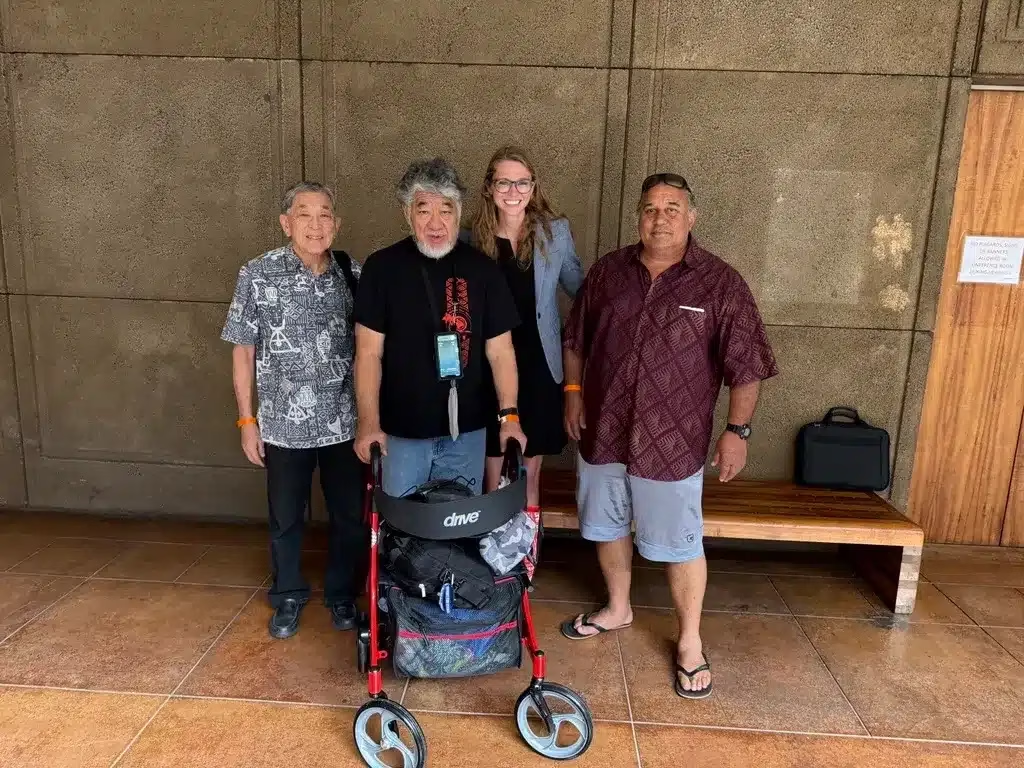
He Survived War … But Almost Died in Prison: The Need for Medical Release in Hawai’i
Joshua Hairston has spent 17 years behind prison walls, almost half his entire life. He was 18 when he was sentenced to 40 years, and it’s almost impossible to imagine how someone that young — facing four decades inside — could find hope for any kind of meaningful future. But that’s exactly what he has…
-
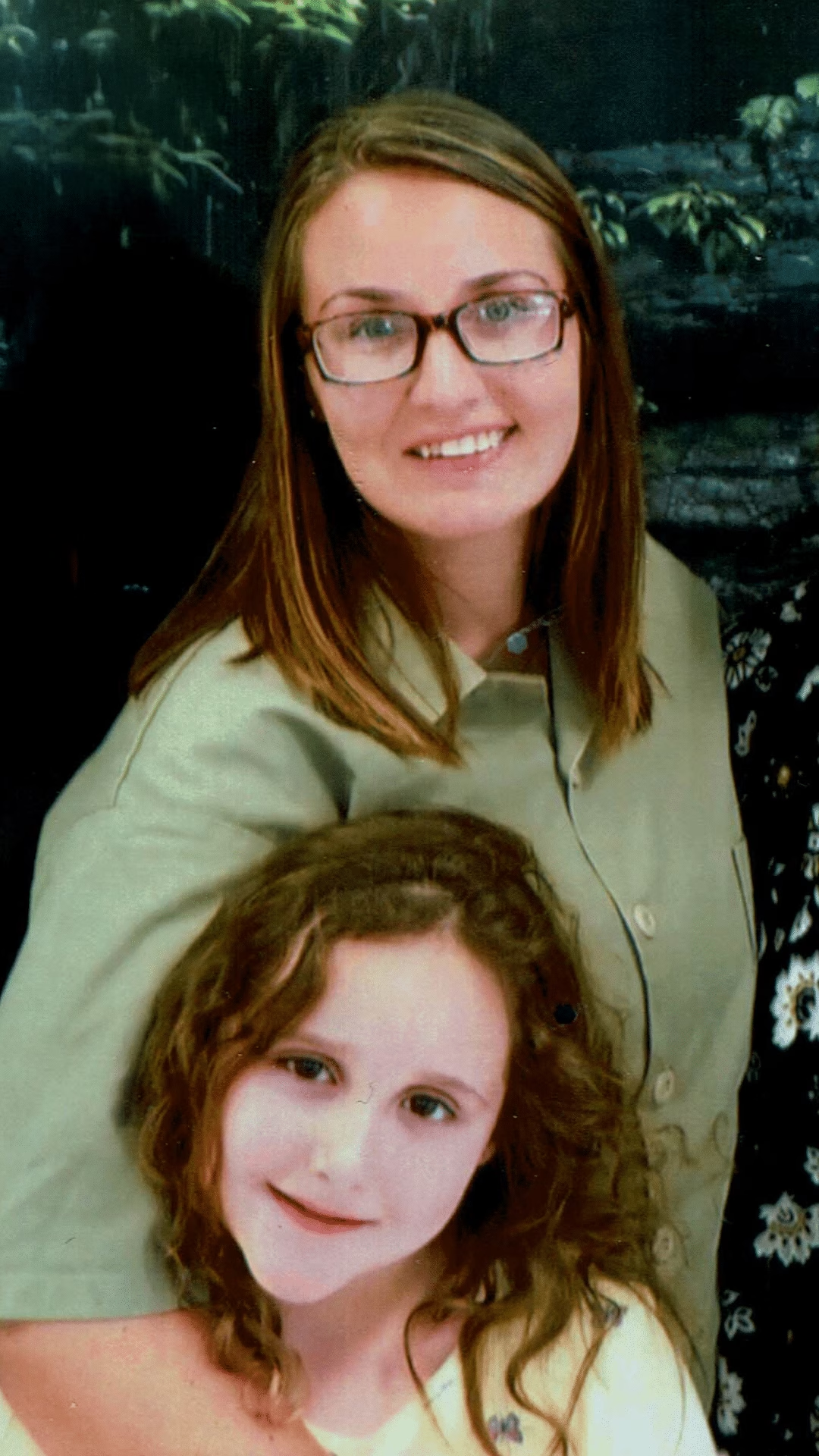
Lockdown Crisis in Prisons: Cruel & Unusual Punishment for Families
The goal of my story is to let you know how awful prison lockdowns are and how they affect the people in prison and their families. My granddaughter Brooke is serving a 40-year sentence in a federal prison and in April will begin her 10th year. She has been sending me emails and letters about…
-
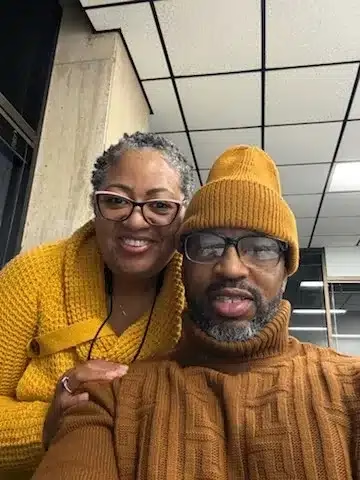
I Sent 45 Cards, One for Every Year He Was Alive
On January 15, 2026, Jerry James was granted a pardon on a 26-year sentence by former Virginia Gov. Youngkin. Jerry’s wife, Paulettra James, has been a staunch FAMM member for years. At one point over the years, Paulettra had the chance to hand-deliver Jerry’s clemency petition to the governor, saying, “I know you and your…